
Blog and announcements
Do dwarf galaxies exist?
Dwarf Galaxies
Text: Fernando Freire
Review: Giulia Tessari
 |
|---|
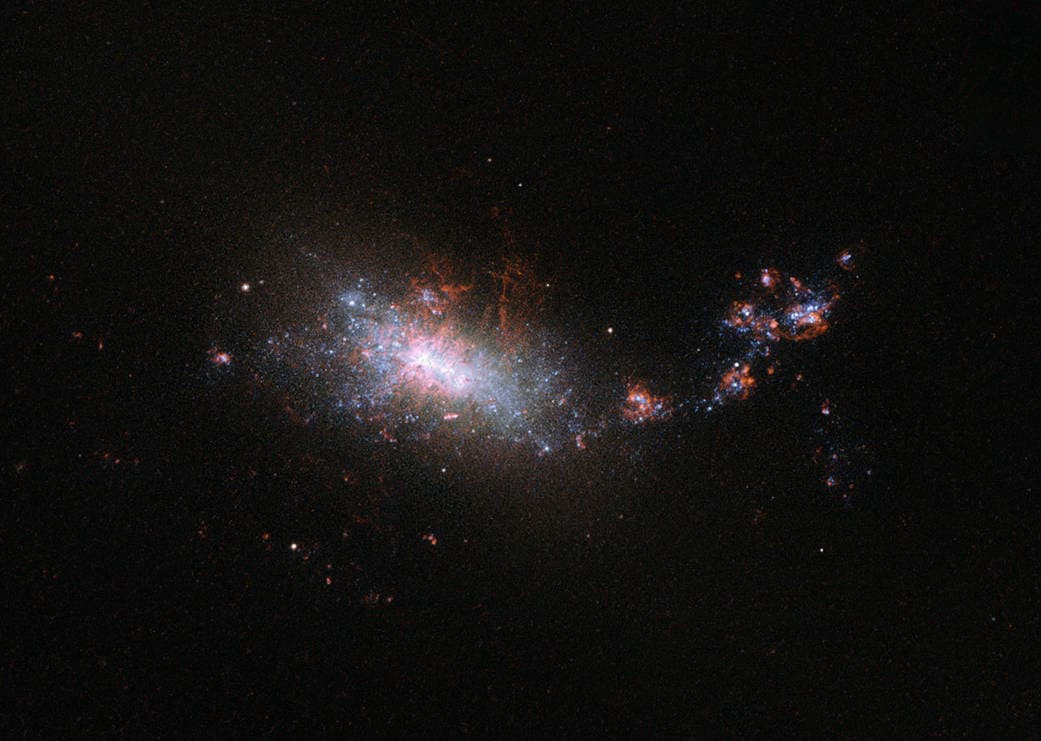
| NGC-1140 Irregular Dwarf Galaxy, 60 million light-years away |
Dwarf galaxies: although they have small dimensions, little mass, a simple structure and are difficult to observe, they are of extreme importance in various areas of astronomy. They are the most abundant galaxies in the Universe and fundamental in studies of cosmology, dark matter, galaxy formation, production of chemical elements, star formation, among many others.
 |
|---|
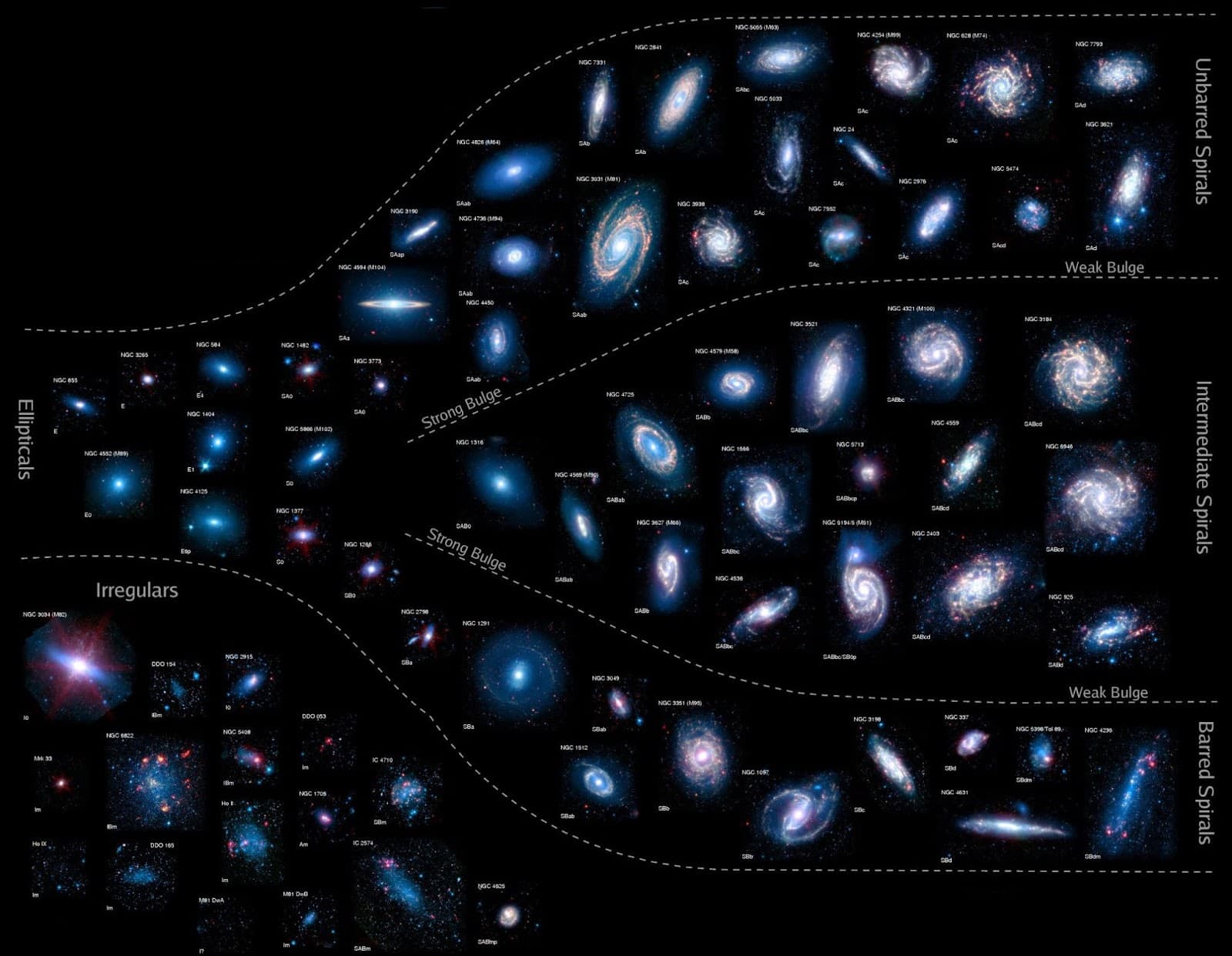
| Hubble classification, also known as |
Tuning Fork or diagram. |
Classification
Until a hundred years ago, the Milky Way was considered to be the whole known universe. At that time astronomers sought only to estimate the dimension of the Galaxy by calculating the distance of the observable stars and mapping them. In this search, objects were found with visual characteristics that distinguished them from stars: they presented a nebulous and smoky appearance. They were called nebulae. A discussion then arose among astronomers about the nature of these objects.
Then, in the 1920s, with the determination of a variable star, observed by E. Hubble, in the Andromeda system, various other nebulae were, in fact, other galaxies, as large and exuberant as ours and very far from us. These galaxies present a great variety of different shapes in the observed properties.
Hubble proposed a simple system for classifying galaxies. He divided them into three types:
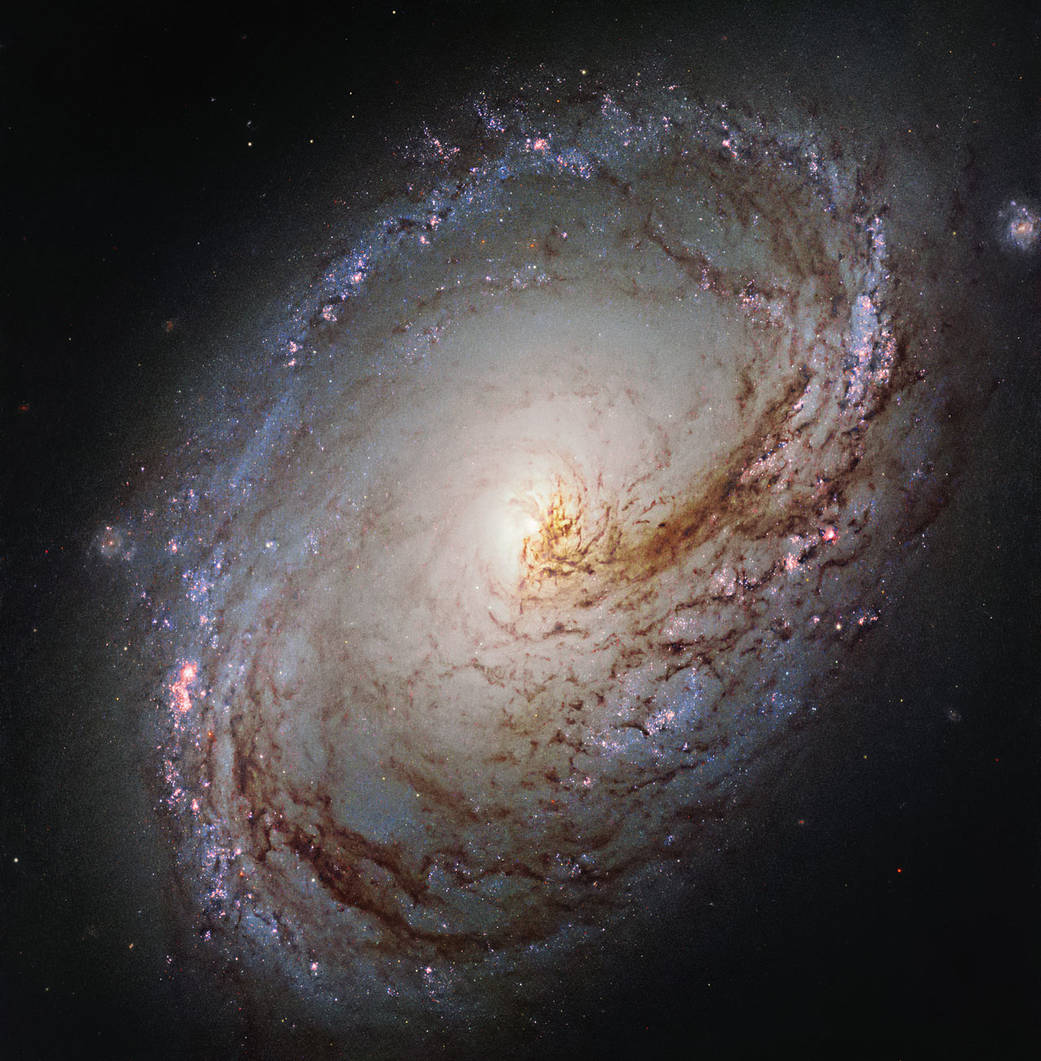
Spiral Galaxy:
Spiral galaxies are so named because of their morphology, since they present a clear spiral structure around their nucleus when seen perpendicular to their plane. They have old and new stars, a large fraction of gas and active star formation, especially in the disc.
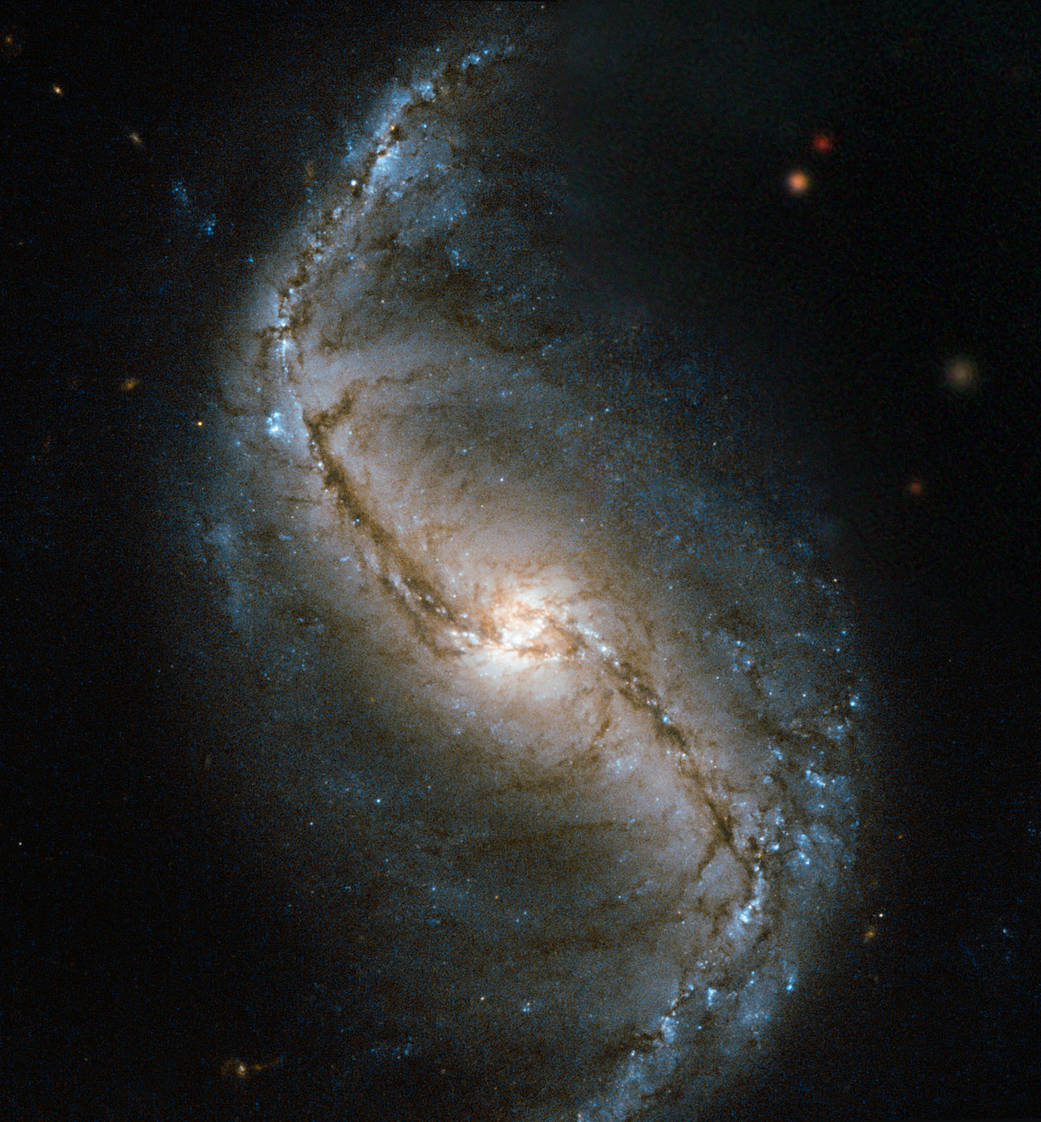 Barred Spiral Galaxy:
A barred spiral galaxy is a spiral galaxy with a central band of bright stars, which extend from one side of the galaxy to the other. The spiral arms seem to arise from the end of the master "bar", whereas in spiral galaxies they seem to arise from the nucleus. It also presents the same rate of star formation, its proportions of old and new stars as in Spiral Galaxies.
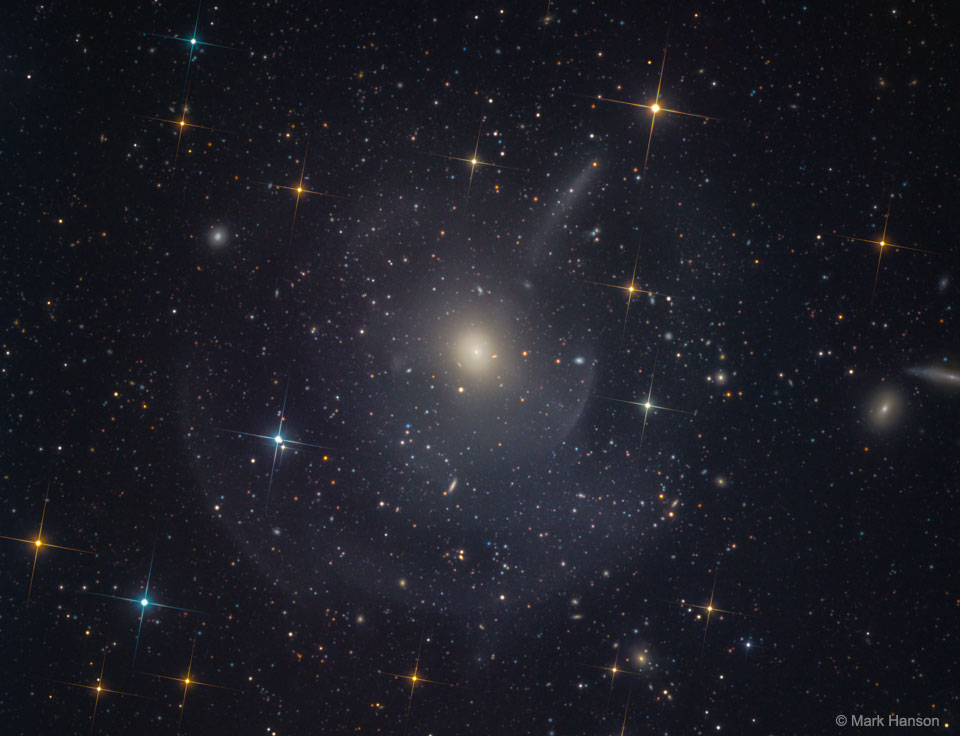
Elliptical Galaxy:
An elliptical galaxy is a type of galaxy with an approximately ellipsoidal shape and a smooth image almost without characteristic features. Mostly composed of older stars, almost no gas and almost no star formation.
Only later was a new category of galaxies established: the dwarfs. How is it defined? In a general way they all have similar characteristics: the total mass is much smaller than that of our Galaxy (between a thousand and a hundred thousand times), the dimensions are small (radii approximately a thousand to ten thousand times smaller) and the brightnesses are also much fainter.
 |
|---|
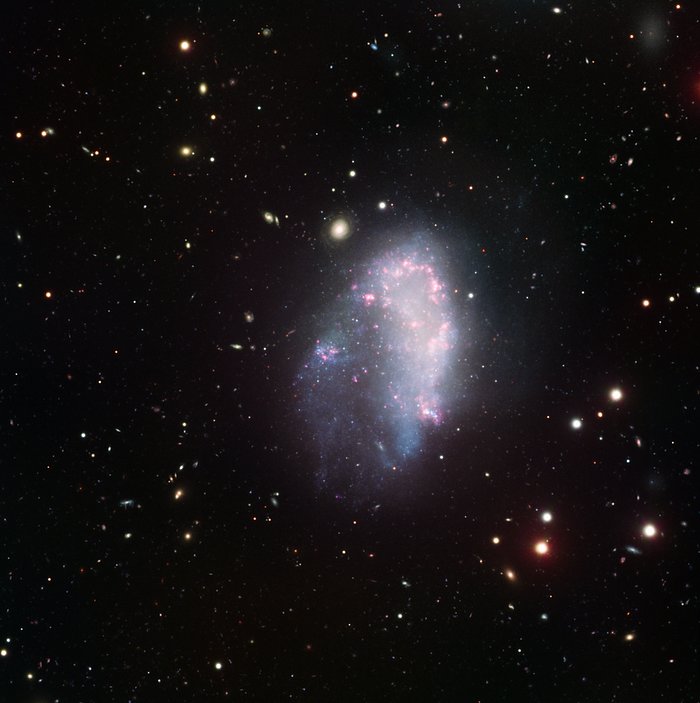
| NGC 1427A Irregular Dwarf Galaxy |
From this, some criteria were established for classifying a galaxy as a dwarf: it must have the dimensions of a star cluster, contain a dark matter halo, have stars with various age ranges and have undergone chemical enrichment. Even with classification criteria, the study of these galaxies is not simple at all. Because they are extremely faint objects, their detection is very difficult, especially when they are very far away.
Theoretical models of formation
An important tool in theoretical studies is the use of computer simulations that allow testing the theory and comparing the results with observations. One of the most used models in galaxy studies is the cosmological model of structure formation, which seeks to explain the evolution of the universe from the initial instants and to propose a scenario for the formation and evolution of large structures such as galaxies to be formed. At the beginning of the evolution of the universe, density variations in the distribution of dark matter create relatively small regions (on a galactic scale) of high density that exert gravitational attraction on the matter around them. The gas then begins to concentrate, forming protogalaxies, with dimensions and masses similar to those of dwarf galaxies.
 |
|---|
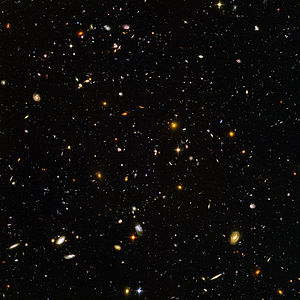
| Hubble Ultra-Deep Field |
After the formation of the protogalaxy, the gas continues to collapse towards the central region, creating clouds of gas called star-forming regions where stars of different masses and sizes arise. The dwarf galaxy is then formed. From that point on, dwarf galaxies continue to evolve, with some interacting and merging with one another to generate large galaxies such as the Milky Way and Andromeda, and others evolving in isolation up to the present time.
Sources: