
Blog and announcements
Hubble makes a discovery in the early Universe
CACP
New results from the NASA/ESA Hubble Space Telescope suggest that the formation of the first stars and galaxies at the beginning of the Universe occurred earlier than previously…
New results from the NASA/ESA Hubble Space Telescope suggest that the formation of the first stars and galaxies at the beginning of the Universe occurred earlier than previously thought. A European team of astronomers has found no evidence of the first generation of stars, known as Population III, up to a time in the past when the Universe was only 500 million years old.
 |
|---|
| Credit: ESA/Hubble, M. Kornmesser |
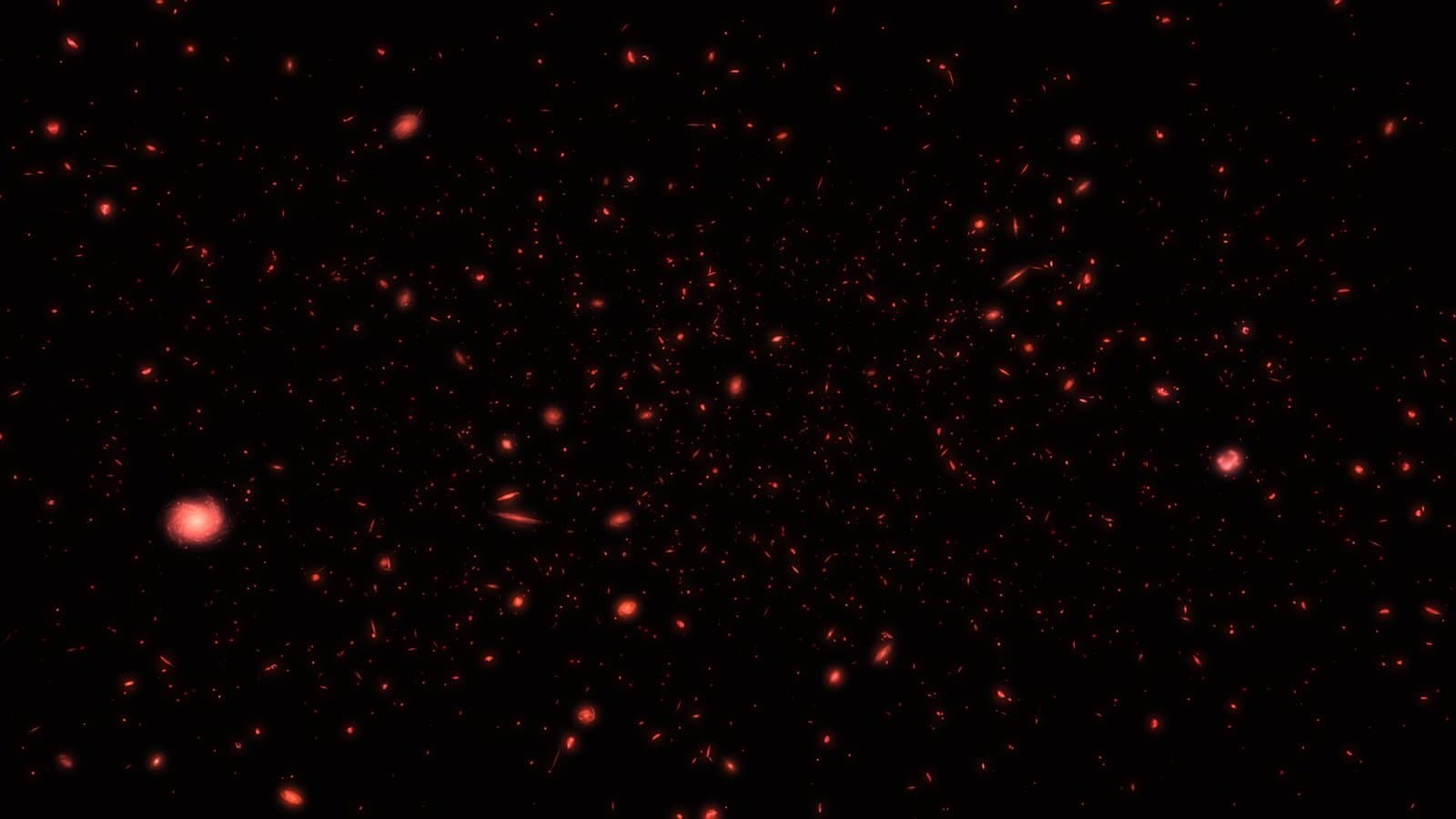
Exploring the first galaxies remains a significant challenge in modern astronomy. We do not know when or how the first stars and galaxies of the Universe formed. These questions can be tackled with the Hubble Space Telescope through deep imaging observations. Hubble allows astronomers to see the Universe up to 500 million years after the Big Bang.
Exploring the first galaxies remains a significant challenge in modern astronomy. We do not know when or how the first stars and galaxies of the Universe formed. These questions can be addressed with the Hubble Space Telescope through deep observations.
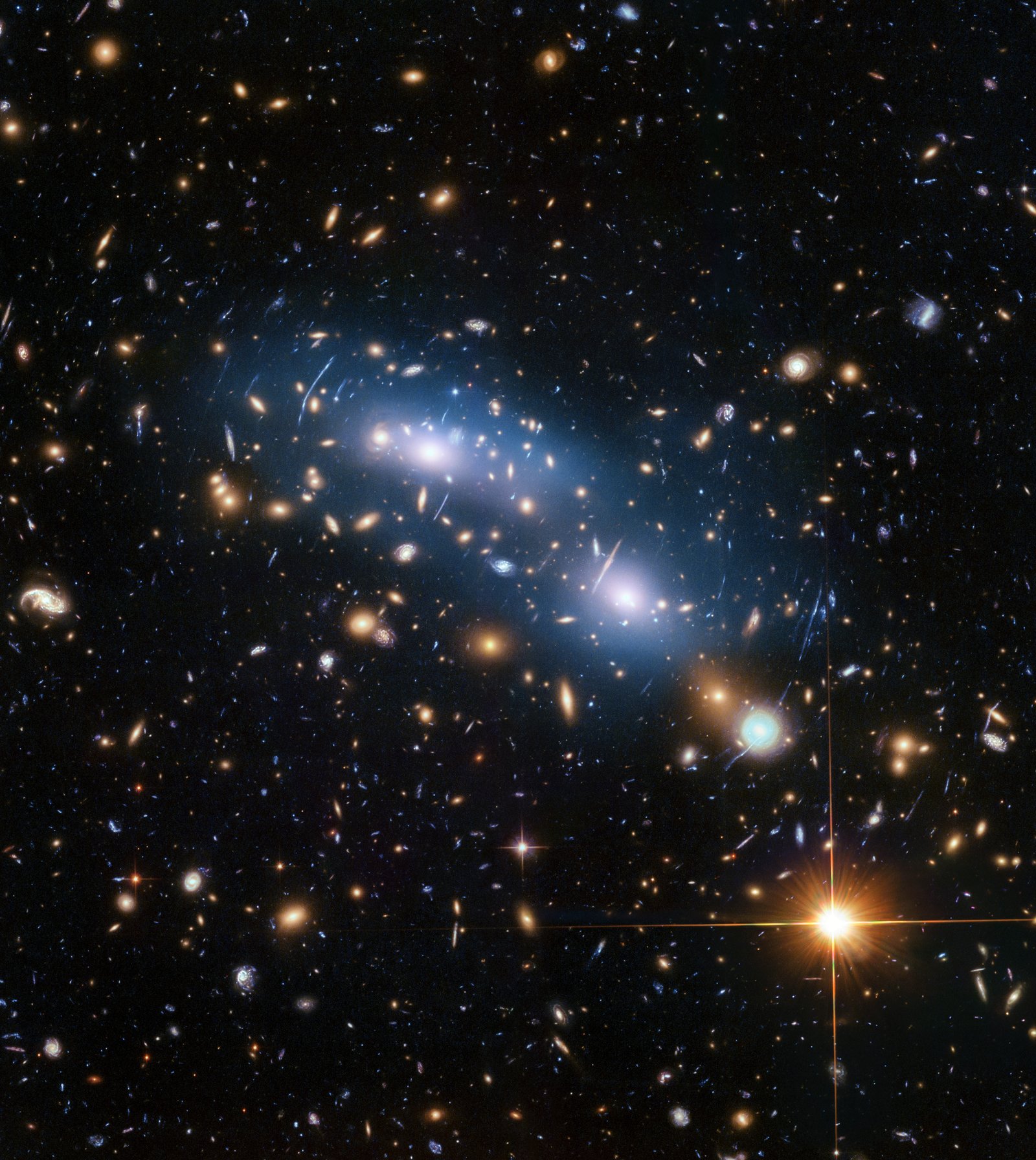
Bhatawdekar and her team investigated the early Universe from about 500 million to 1 billion years after the Big Bang, studying the cluster MACSJ0416 and its parallel field with the Hubble Space Telescope (with supporting data from NASA's Spitzer Space Telescope and the ground-based Very Large Telescope of the European Southern Observatory). "We found no evidence of these first-generation Population III stars in that cosmic time interval," said Bhatawdekar about the new results.
 |
|---|
| Credit: NASA, ESA and M. Montes |
(University of New South Wales, Sydney, Australia) |
The result was achieved using the Hubble Space Telescope's Wide Field Camera 3 and the Advanced Camera for Surveys [2], as part of the Hubble Frontier Fields programme. This programme (which observed six distant galaxy clusters from 2012 to 2017) produced the deepest observations ever made of galaxy clusters and of the galaxies located behind them, which were magnified by the effect of gravitational lensing, revealing galaxies 10 to 100 times fainter than those observed previously. The masses of foreground galaxy clusters are large enough to bend and magnify the light of the most distant objects behind them. This allows Hubble to use these cosmic magnifying glasses to study objects that are beyond its nominal operating capabilities.
Bhatawdekar and her team developed a new technique that removes the light of the bright foreground galaxies that constitute these gravitational lenses. This allowed them to discover galaxies with lower masses than those observed previously with Hubble, at a distance corresponding to when the universe was less than a billion years old. At this point in cosmic time, the lack of evidence for exotic stellar populations and the identification of many low-mass galaxies corroborates the suggestion that these galaxies are the most likely candidates for the reionisation of the universe. This period of reionisation in the early universe is when the neutral intergalactic medium was ionised by the first stars and galaxies.
"These results have profound astrophysical consequences, as they show that galaxies must have formed much earlier than we thought," said Bhatawdekar. "This also strongly supports the idea that low-mass / faint galaxies in the early universe are responsible for reionisation".
These results, based on an earlier scientific paper from 2019 and on another paper to be published in the journal Monthly Notices of the Royal Astronomical Society, also suggest that the earliest formation of stars and galaxies occurred much earlier than can be investigated with the Hubble Space Telescope. This leaves an exciting area of further research for the NASA/ESA/CSA James Webb Space Telescope - to study the first galaxies of the Universe.
Bibliography: