
Blog and announcements
Parker's 5 discoveries
CACP
Parker Solar Probe. Text and editing: Fernando Freire, Giulia Tessari. Developed by NASA, the Parker Solar Probe was created with the aim of better understanding our Sun, being…
Parker Solar Probe
Text and editing: Fernando Freire, Giulia Tessari
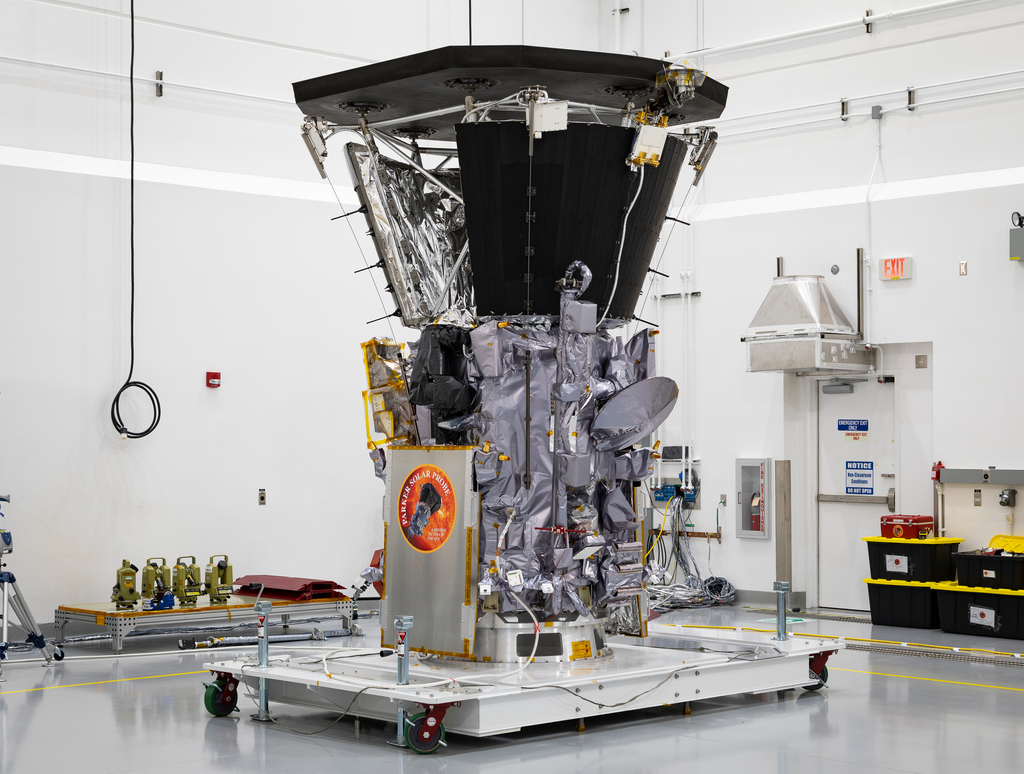
The Parker Solar Probe, developed by NASA, was created with the aim of better understanding our Sun, and several doubts may be resolved with a closer study of the particles that leave the star and of the region around it. The probe had its first orbit around the Sun in November 2018 and its mission is scheduled to end in 2024. And on 11 December 2019, five researchers presented new findings from Parker at the American Geophysical Union fall meeting! They had their first papers published by Nature last month and showed us some very peculiar behaviours of our star, such as new data on the processes behind the solar winds (the continuous effusion of solar material), on the solar storms that can harm astronauts and cause technological failures; and even on the creation of the Geminids meteor shower! Shall we explore these novelties further?!
- First discovery - Observing Asteroid Fingerprints
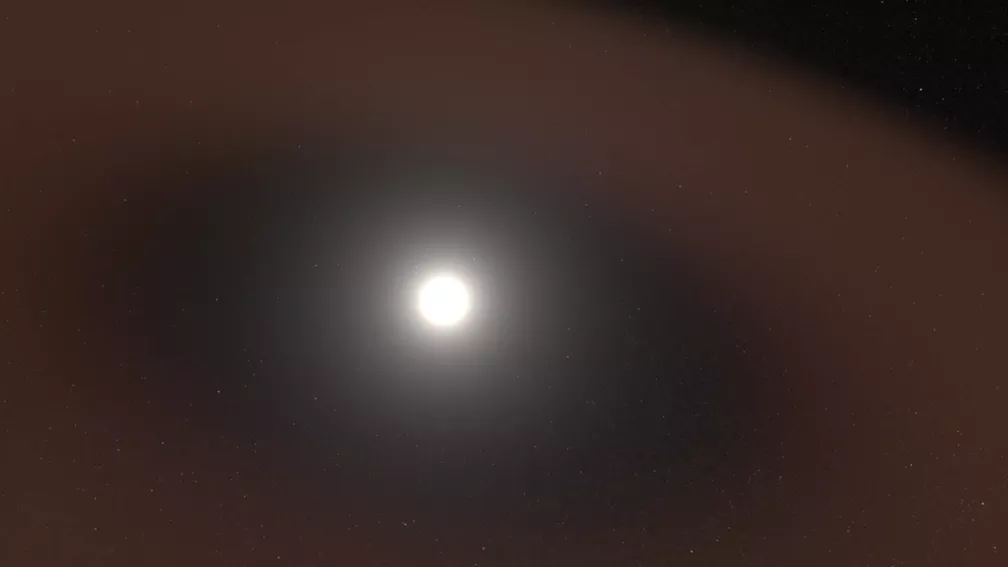
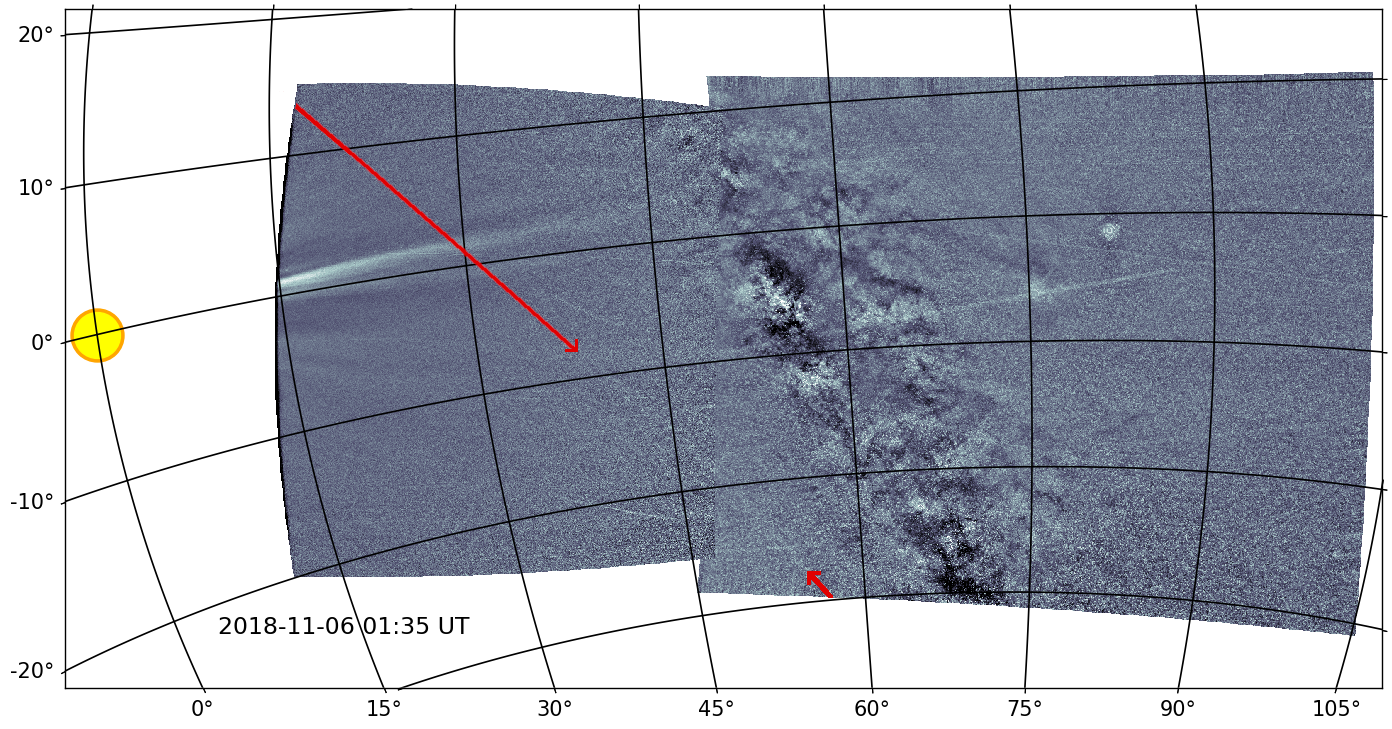
We know a lot about the dispersion of interplanetary matter in the solar system, but there is not so much dust near the Sun, due to the probable evaporation near the corona, since we enter the hottest point of our solar system (find out more in the next topic!). The Parker probe accidentally recorded a dust trail of more than 96 thousand kilometres in the orbit of the asteroid Phaethon (responsible for creating the Geminids meteor shower) near the Sun! This trail is a structure that is very difficult to see and had never before been observed by any telescope. New information was also obtained about this trail, and its order of mass of billions of tonnes exceeds what was previously predicted to be produced by Phaethon in the region close to the star!
- Second discovery - Switchbacks and the Hottest Point of the Solar System
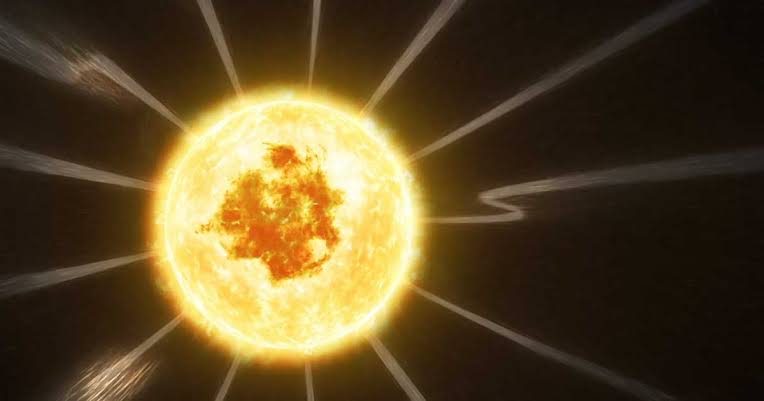
The magnetic field lines make a 180° movement, bending backwards, just after leaving the Sun (switchbacks). These strange events were described for the first time in the initial results of the Parker probe of 04 December 2019. The flux released by the Sun is continuous, but disturbances in the journey made by the solar winds make the magnetic field "fold". The exact origin of this phenomenon is not yet certain, but there may be signatures of the process that heats the solar corona to temperatures much higher than the surface of the Sun! Although the cause of this counter-intuitive effect is an ancestral question in solar science (known as "the coronal mystery"), it is known that it is intimately related to how the solar wind is energised and accelerated. It is inferred that the switchbacks are probably related to individual releases of kinetic energy in the Sun, called 'jets'. And if they are 'jets', there must be a large quantity of small events happening in the Sun that would contribute in great proportion to the total energy of the solar wind, causing the increase in the temperature of the corona. We just have not observed them yet... and the question remains a mystery.
- Third discovery - Young Solar Winds
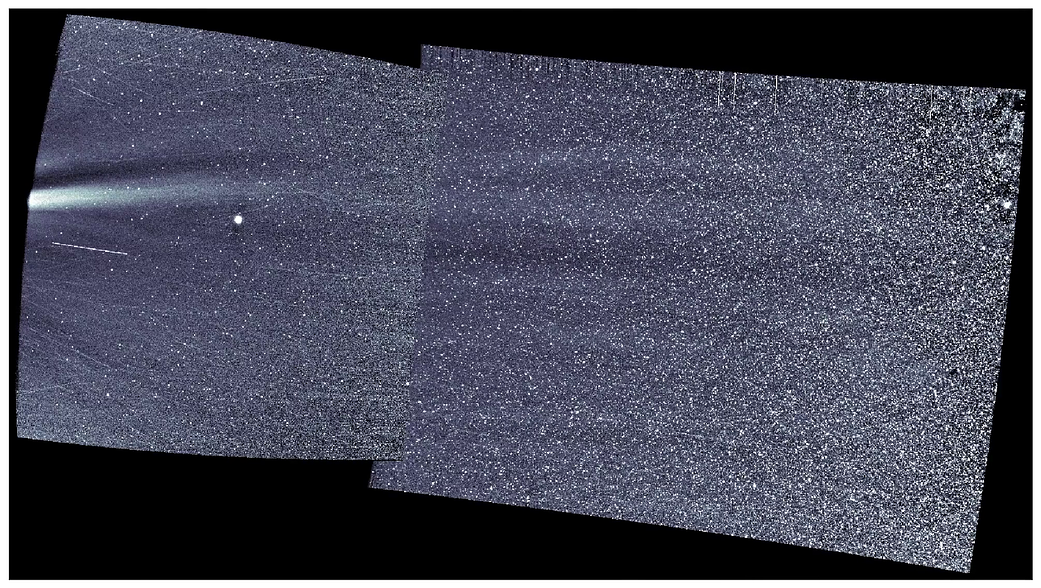
One of Parker's main initial objectives was to pinpoint the mechanisms responsible for the dispersion of the solar winds in space at very high speeds (more than 1 million kilometres per hour!). Scientists have also always wondered whether the solar wind was generated as a continuous flow or whether it was generated in jets. Parker has now observed much clearer evidence of rather irregular textures of the solar wind, besides the plasma in this wind, which also does not have a very well-defined direction. These irregular structures of relatively dense material of the solar wind are much larger than the entire terrestrial magnetic field, and they can compress it on a global scale when they meet it! When the solar winds reach the Earth, the planet's magnetosphere may have its dynamics altered, mainly by particle precipitation, causing interference in the auroras and in satellites. The very high ejection speeds may be the result of perturbations of the solar wind, which supposedly would lead to heating and accelerating it.
- Fourth discovery - Inside a Solar Storm
The Solar Corona is the outermost and faintest layer of our star and the one that transitions into the solar wind. Before Parker, scientists knew that the corona rotated with the visible part of the surface below it, releasing, besides the solar winds, clouds of material from the corona itself. This phenomenon is called 'coronal mass ejection' (CME) and its occurrence is difficult to predict, as many of them occur in regions that are not visible, and so are the effects it will have on the terrestrial magnetic field and on space weather. During Parker Solar Probe's first solar flyby, in November 2018, it was hit by a type of CME that can be seen in coronagraphs (instruments that observe only the outer atmosphere of the Sun, the region of the corona) but which do not have a clear signature of their place of origin. It was the first time that a CME was studied with the instruments inside the ejection itself! Data such as its speed, temperature and electron and proton densities were measured. Such data may help scientists in the process of tracing these CMEs back to their places of origin!
- Fifth discovery - Energetic Particle Eruption
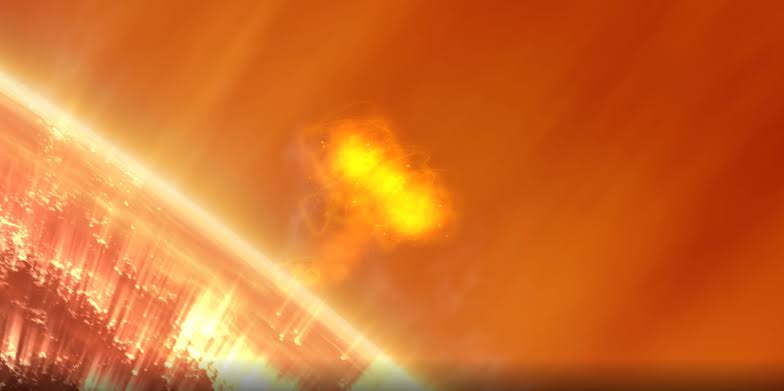
Parker managed to observe some small explosions of solar energetic particles. These events are not novelties, but rather the scale on which they were seen in April 2019. These particles move very close to the speed of light and can damage satellites, various electronics and put astronauts in danger. Their high speed contributes to making them even harder to avoid, as well as to predict. By observing the ejection of these particles up close, one can better understand how solar winds can create these populations of particles and eject them, helping to improve models that explain the movement of these particles in space and in predicting the occurrence of these explosions.
After almost 18 months in space, culminating in the release of new scientific data, the Parker Solar Probe is on its way to its second gravity assist manoeuvre at Venus. This flyby will configure the probe for its fourth perihelion of the Sun, during which it will set speed records and a smaller solar distance, continuing to collect innovative data from the Sun's corona. As seen above, Parker's data are of great assistance in research about our star and the scientific community awaits, with great expectations, what this probe still has to show us!
Sources: