
Blog and announcements
Why may it have become harder to find evidence of life on Mars?
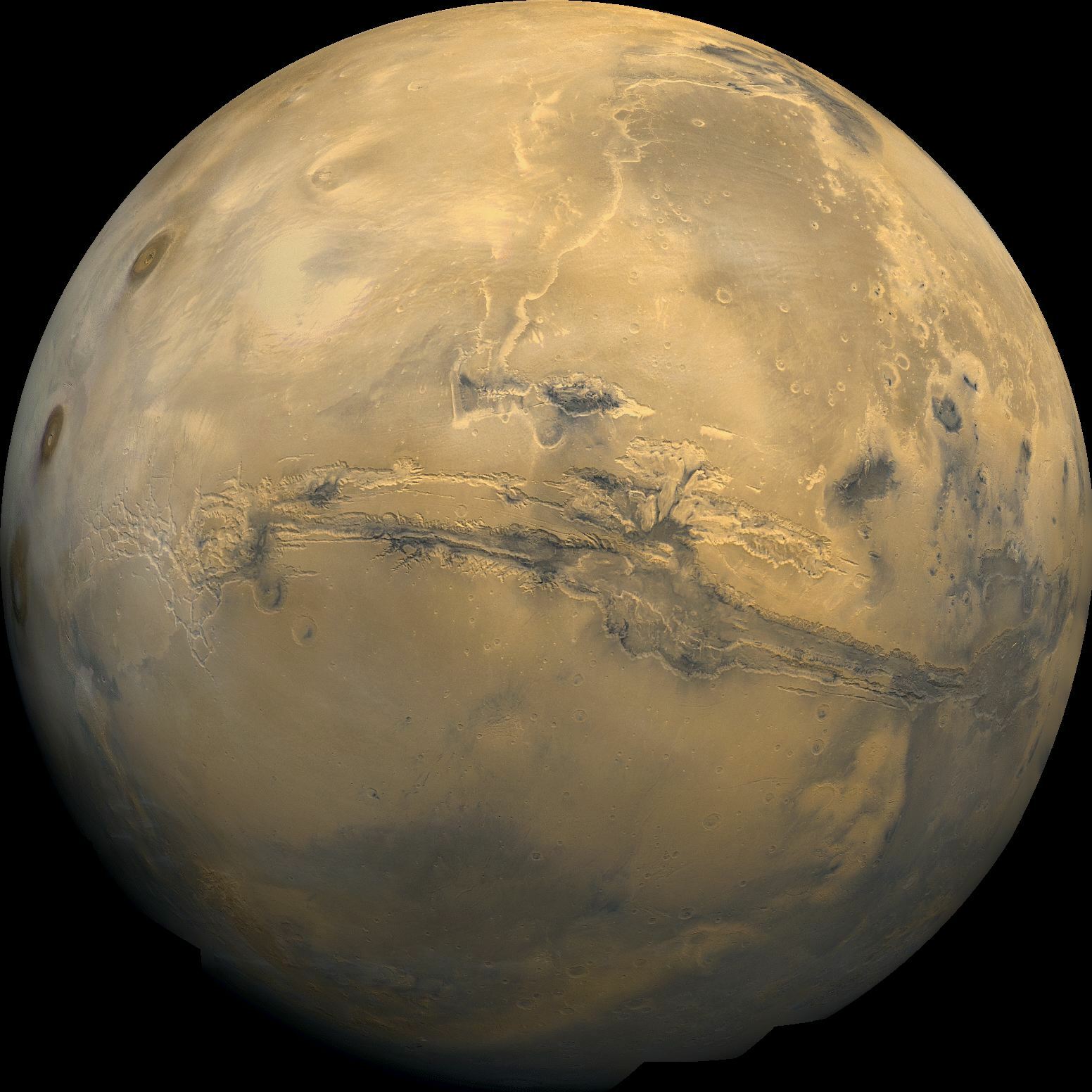
In a little over a decade, samples of martian soil dug up by a rover will be sent to Earth.
 |
|---|
| Image credit: NASA |
While scientists are eager to study the soils of the Red Planet in search of signs of life, researchers must reflect on a considerable new challenge: acid fluids - which once ran on the martian surface - may have destroyed biological evidence hidden in the iron-rich clays of Mars, according to researchers from Cornell and the Centro de Astrobiología of Spain.
 |
|---|
| Credit: NASA/JPL-Caltech |
Scientists carried out simulations involving clays and amino acids to draw conclusions about the probable degradation of biological material on Mars. Their paper was published last 15 September in the journal Nature Scientific Reports.
Alberto G. Fairén, visiting scientist at the Department of Astronomy of the College of Arts and Sciences, is a corresponding author.
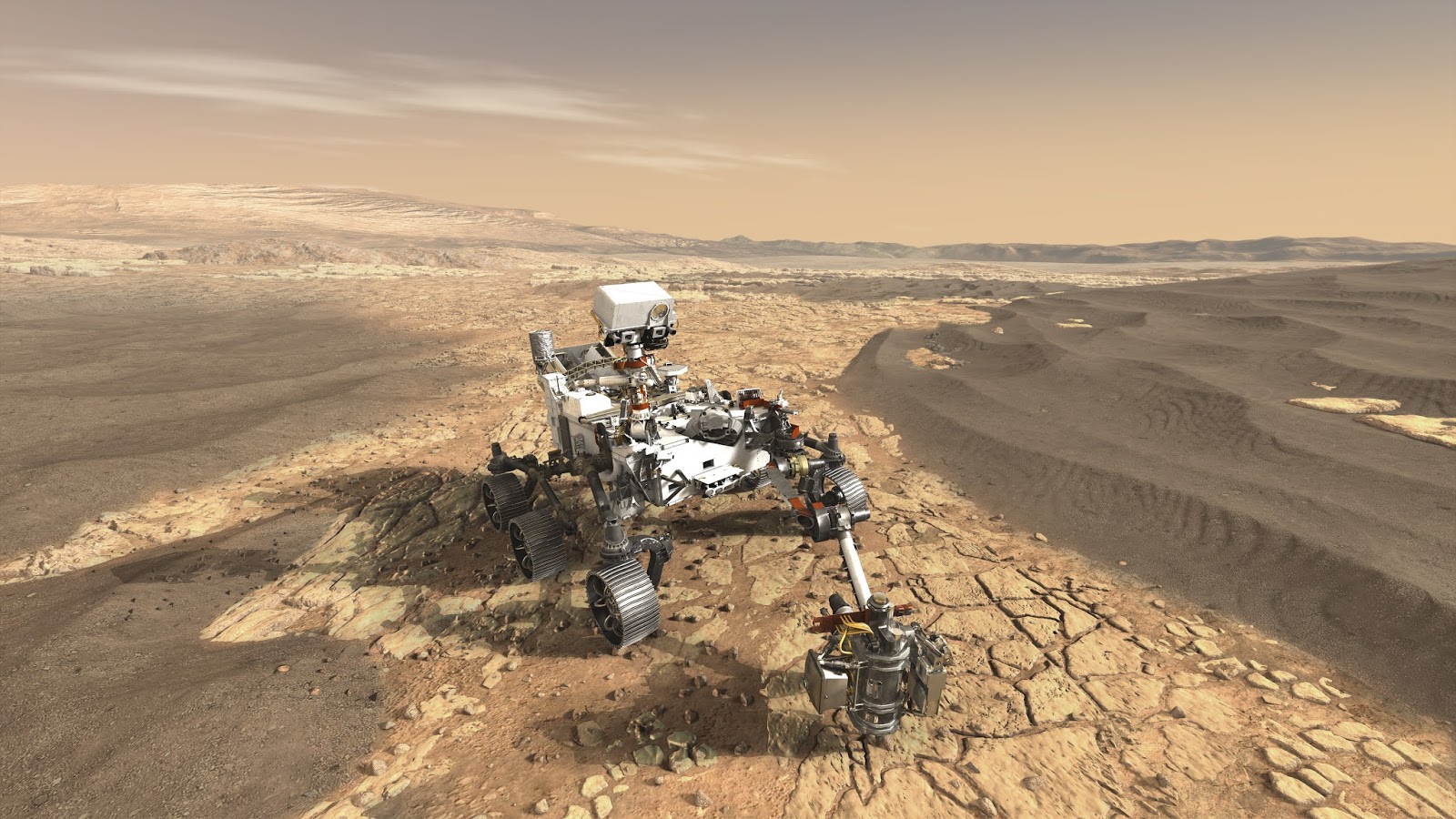
NASA's Perseverance rover, launched on 30 July, will land in Jezero Crater on Mars next February; ESA's Rosalind Franklin rover will be launched at the end of 2022. The Perseverance mission will collect samples of martian soil and send them to Earth by the 2030s. The Rosalind Franklin rover will drill the surface of Mars, collect soil samples and analyse them "in situ".
In the search for life on Mars, the soils of the clayey surface of the Red Planet are a preferred target for collection, since the clay protects the molecular organic material inside it. However, the previous presence of acid on the surface may have compromised the ability of the clay to protect evidence of past life.
"We know that acid fluids ran on the surface of Mars in the past, altering the clays and their ability to protect organic material," said Fairén.
 |
|---|
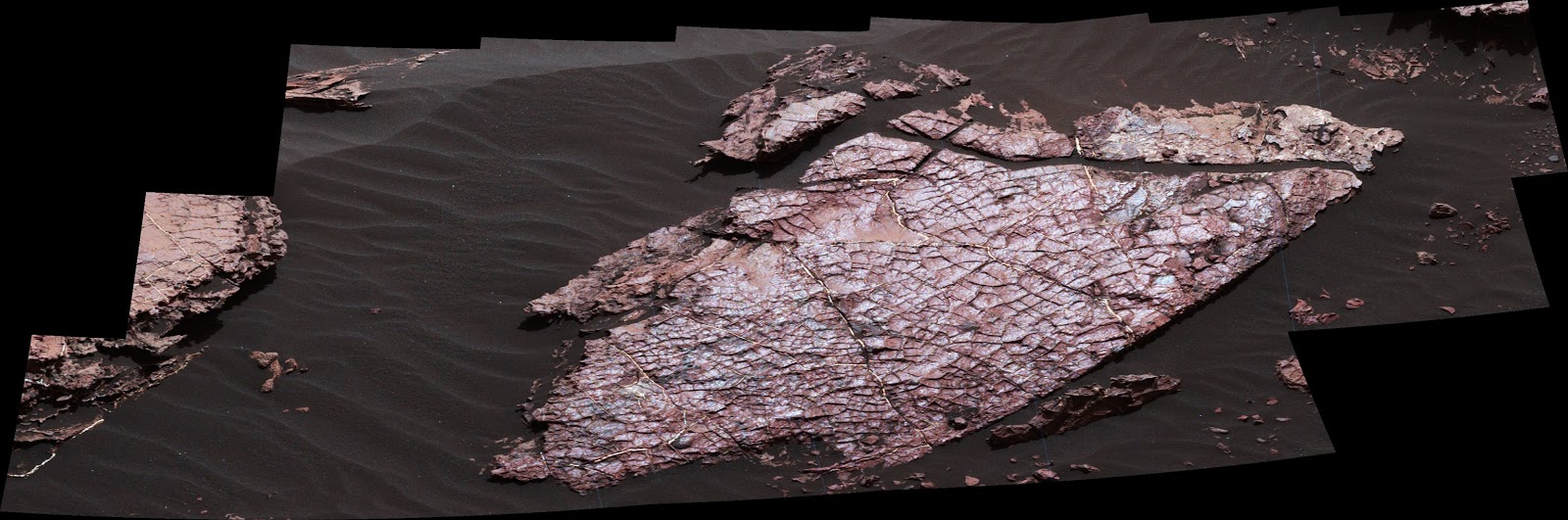
| Mastcam visualisation from the Mars Rover of possible cracks in the mud (with labels) |
Credits: NASA / JPL-Caltech / MSSS |
He said that the internal structure of the clay is organised in layers, where evidence of biological life - such as lipids, nucleic acids, peptides and other biopolymers - can become trapped and well preserved.
In the laboratory, the researchers simulated the conditions of the martian surface with the aim of preserving an amino acid called glycine in the clay, which had previously been exposed to acid fluids. "We used glycine because it can degrade quickly under the environmental conditions of the planet," he said. "It is a perfect informant to tell us what was happening in our experiments."
After a long exposure to ultraviolet radiation similar to that of Mars, the experiments showed photodegradation of the glycine molecules embedded in the clay. Exposure to acid fluids erases the space between the layers, turning it into a gel-like silica.
"When clays are exposed to acid fluids, the layers collapse and organic matter cannot be preserved. They are destroyed," said Fairén. "Our results in this paper explain why investigating organic compounds on Mars is so difficult."
 |
|---|
| Image credit: Curiosity Mars NASA / JPL-Caltech |
The main author of the paper is Carolina Gil-Lozano of the Centro de Astrobiología of Madrid and of the University of Vigo, Spain.
Bibliography: